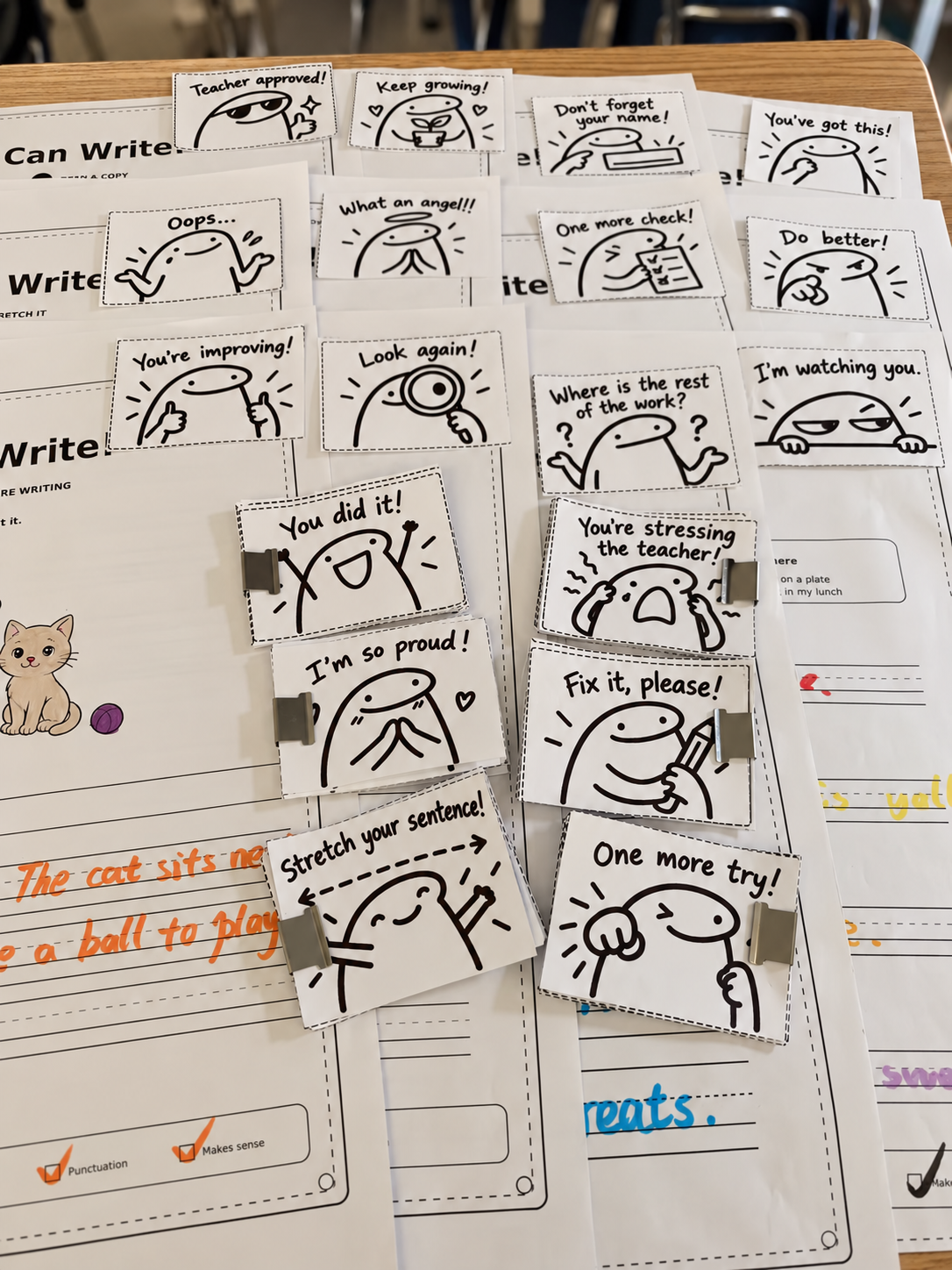
Pick one thing the student can check now
A sticker becomes more useful when the child knows what to do with it. Choose one visible feature of the work, read the message with the child, and ask them to show you the check or change. Keep the comment close to the sentence you are discussing.
The examples below use messages from the actual BeMoFun free PDF. It contains 90 stickers across six categories on six US Letter pages. The overview shows the range; the writing and effort messages are used in the examples that follow.
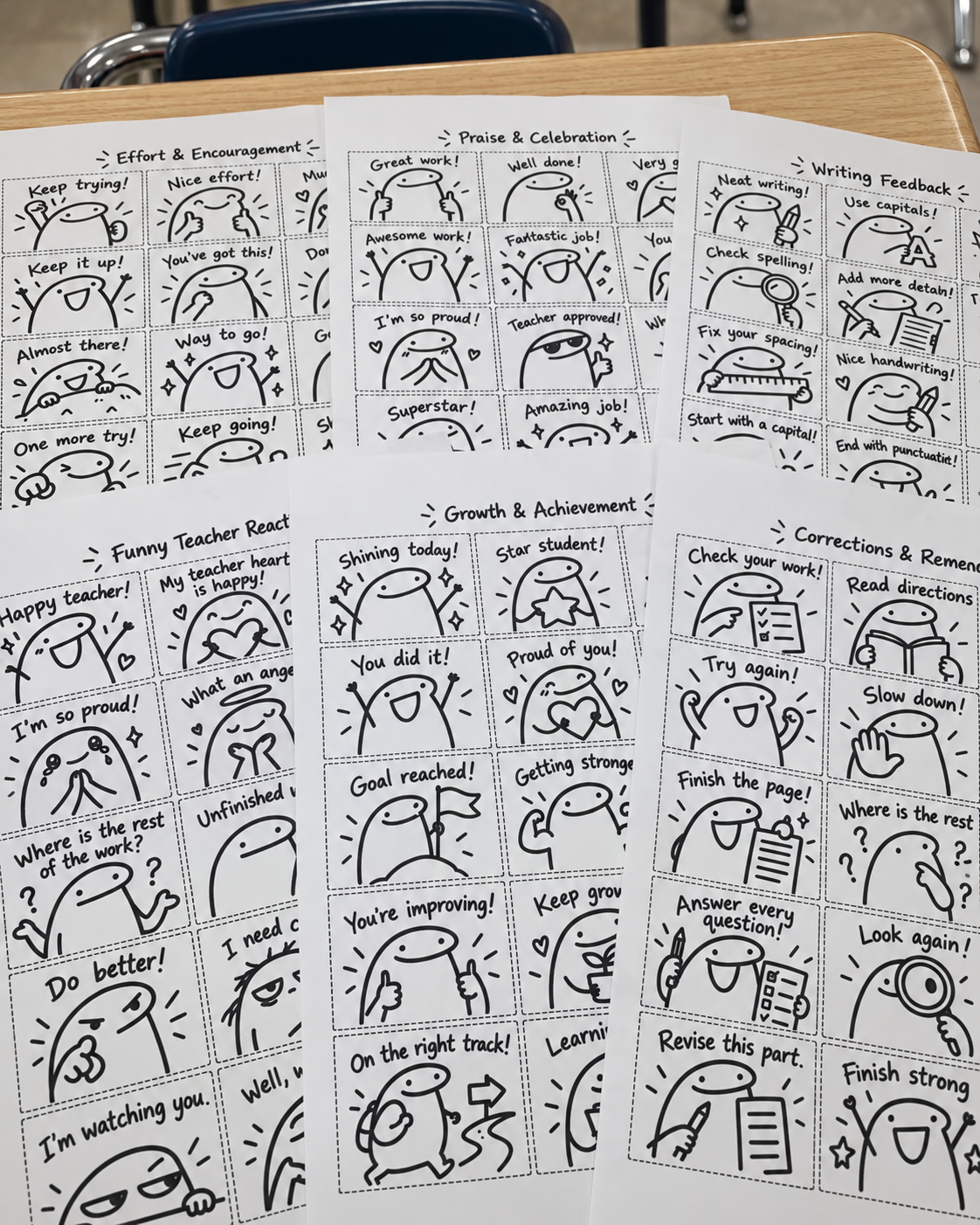
Six messages and a practical way to use each
The sticker wording is copied from the PDF. The prompts in the right-hand column are suggested words for you to say; choose the one that matches the actual work.
| What you notice | Message in the set | Try saying and checking |
|---|---|---|
| A sentence begins with a lowercase letter. | Use capitals! | “Show me the start of your sentence. Which letter needs to change?” Let the child make the change. |
| A completed statement has no ending mark. | Add punctuation! | “Read your sentence to the end. Where does the period belong?” Check that it is added. |
| Two words run together. | Fix your spacing! | “Point to each word as you read. Where do we need a space?” Check the next written attempt. |
| A word has been left out. | Reread your writing! | “Read exactly what is here. Does it say what you meant?” Help the child locate the gap. |
| The idea is clear but needs a useful detail. | Add more detail! | “What could you tell your reader about where this happened?” Ask for one revised sentence. |
| The child returns to a difficult part and tries again. | Nice effort! | “You went back to that word and tried it again.” Name the action you noticed. |
Try a complete feedback exchange
Here is a suggested exchange for the sentence “i see a cat.” If your focus is the start of a sentence, choose “Use capitals!” and point to the first letter. Ask the child to read, change i to I, and show you “I see a cat.”
Respond to the change: “You checked the beginning and made I a capital.” You have now linked the sticker, your explanation, and the child’s action. Leave other teaching points for the appropriate moment instead of adding several correction stickers to the same short sentence.
Make praise as specific as a correction
For “Nice effort!”, explain the effort you saw: trying a spelling again, reading a sentence back, or using the word bank after getting stuck. For “Great sentence!”, name what made it work. A complete idea or a helpful detail is something the child can try again next time.
Read a humorous message before choosing it for a child. The set offers several tones; use one that the learner will understand as helpful. A calm explanation is still needed when the student is unsure what the message means.
Prepare a small feedback tray
For a sentence-writing lesson, select the Writing Feedback page, choose a few messages that fit the current goal, and keep them beside the work you will review. Print on US Letter paper, cut the messages, and attach them to student work. Ordinary paper and glue can be used; check your printer and paper instructions if you choose adhesive sheets.
At the next lesson, ask the child to remember the same check before handing in a new sentence. You can use the stickers with materials you already teach. The free PDF needs no sign-up or purchase; the resource page provides the download and optional links to separate writing products.