
Teach a routine as a lesson
Naming a rule is not the same as teaching a routine. Show the steps, model what success looks like, let students practice, and give specific feedback.
Use the same visual directions each time. Students can refer to them while the routine becomes automatic.
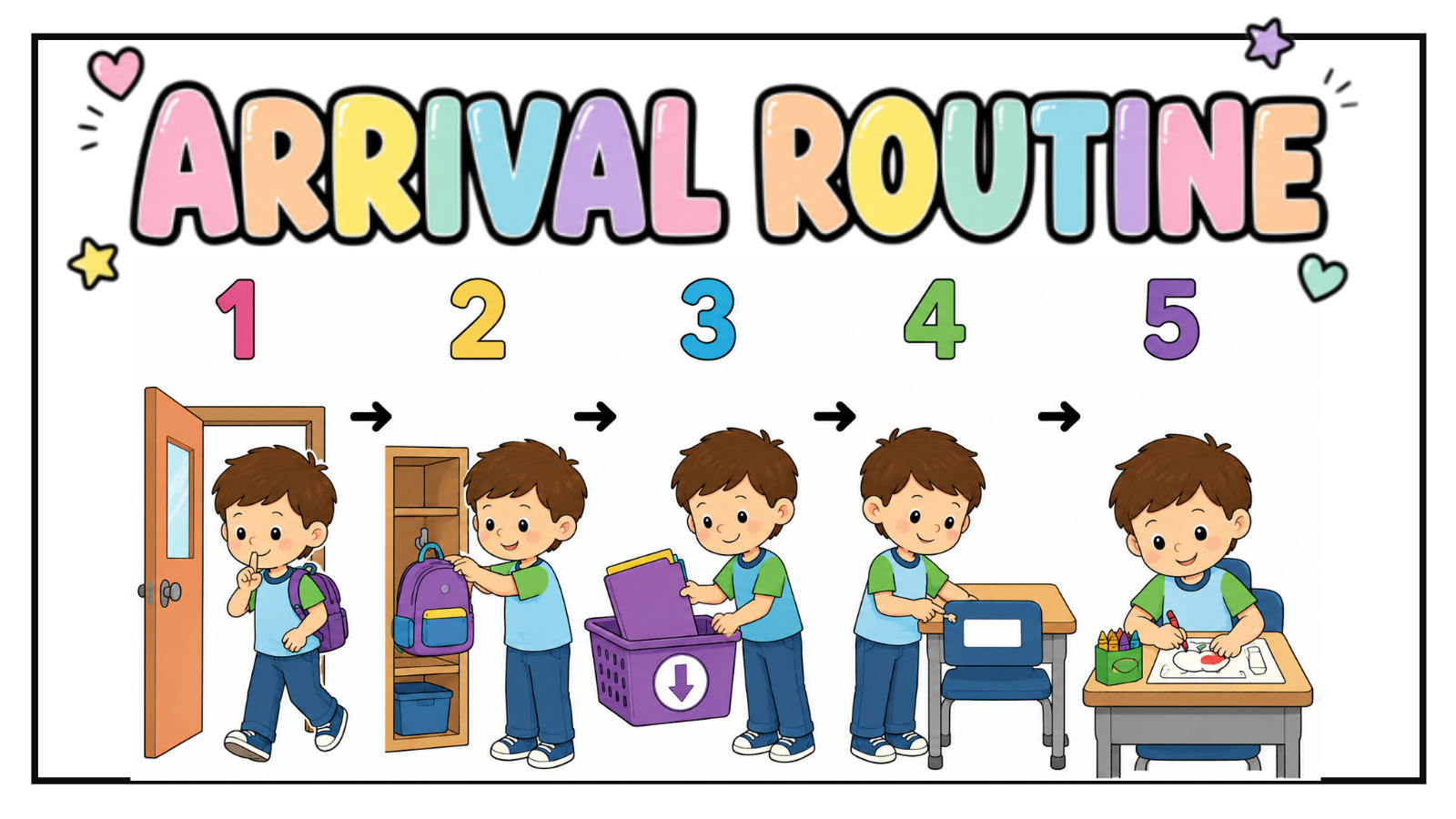
Prioritize routines students need immediately
Start with arrival, attention signals, restroom expectations, movement in the room, materials, and dismissal. Partner work and independent learning routines can follow when students need them.
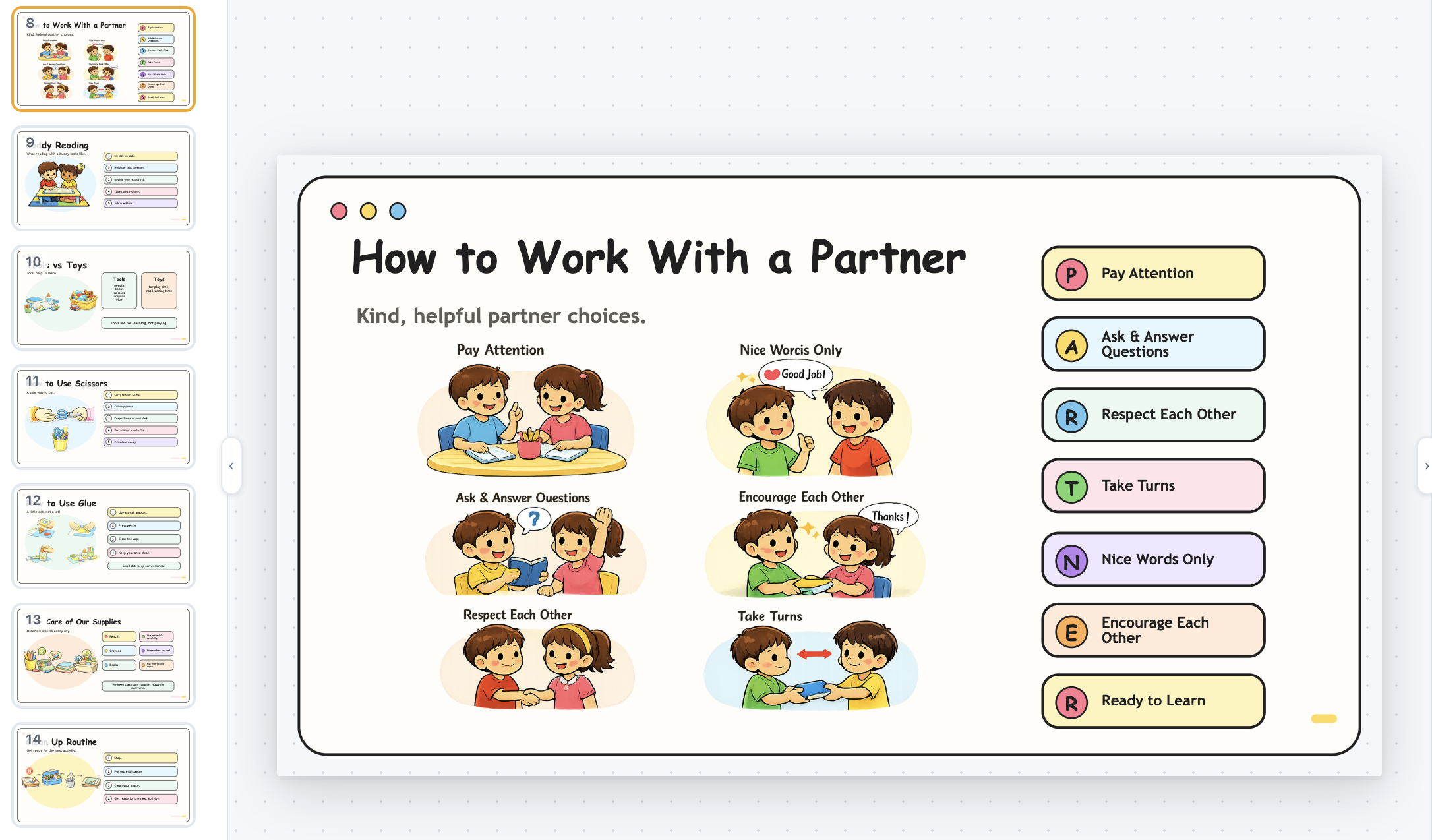
- Explain why the routine matters.
- Show each step.
- Model and notice.
- Practice together.
- Reset and try again when needed.
Reteach without turning it into a punishment
When a routine breaks down, shorten the explanation and return to practice. Ask students which step was missed, then repeat the sequence successfully.
Revisit visuals after weekends, schedule changes, or long breaks. Consistent reteaching protects learning time and helps first graders feel secure.